
Cooling
Ice on your AC lines: what it means and what to do
Ice on an air conditioner is a symptom, not the problem. Here’s what usually causes it, how to thaw the system safely, and what to check before you call.
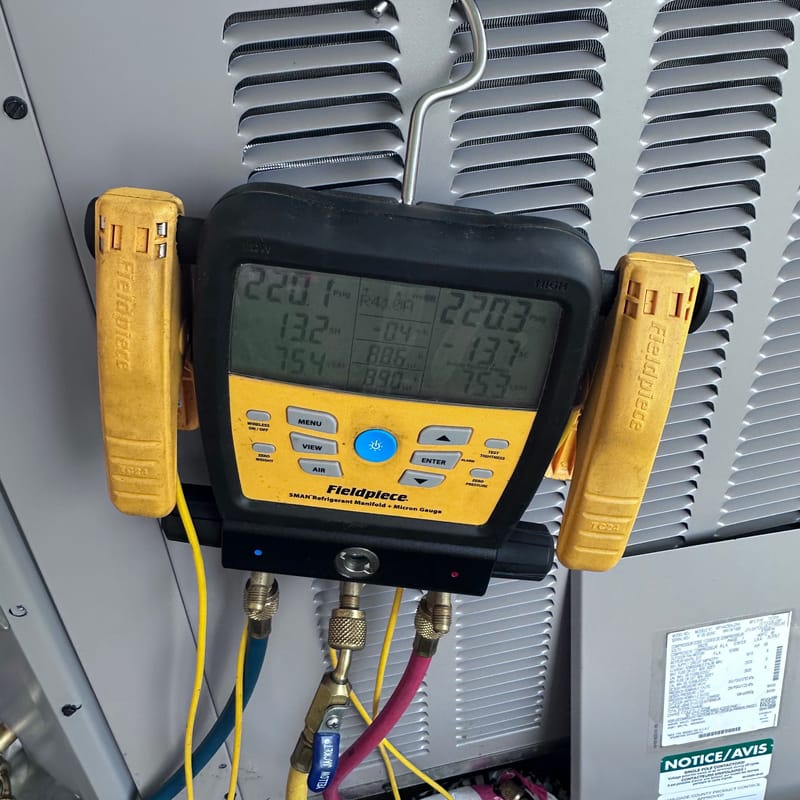
An air conditioner is supposed to make its indoor coil cold, but not below freezing. When ice appears on the copper lines outside or on the coil inside, something has pushed the coil temperature too low. The system can’t cool well while it’s iced over, and running it that way can damage the compressor.
What to do right away
- Turn cooling off at the thermostat. Leave the system set to Off.
- Set the fan to On. Moving air across the coil speeds up thawing. Depending on how much ice there is, this can take several hours.
- Check the air filter. If it’s dirty, replace it before running the system again.
- Watch for water. As the ice melts, the drain pan and condensate line have to carry a lot of water. Keep an eye on the area around the indoor unit.
What not to do
- Don’t chip or scrape the ice. The coil fins and copper tubing are easy to puncture.
- Don’t keep running cooling to “push through” it. The ice usually gets worse, and liquid refrigerant can reach the compressor.
- Don’t add refrigerant yourself. Refrigerant work requires EPA Section 608 certification, and adding refrigerant without finding the cause won’t fix the problem.
What usually causes it
Restricted airflow. This is the most common cause. A clogged filter, closed or blocked return vents, a dirty indoor coil, or a weak blower motor all reduce the warm air passing over the coil, so it gets colder than it should.
Low refrigerant. Air conditioners don’t use up refrigerant. A low charge means a leak, and lower pressure in the coil means a lower temperature, which leads to ice.
Running in cool weather. Running cooling when it’s cool outside, especially at night, can drop coil temperatures enough to freeze.
Drainage problems. These don’t cause the freezing themselves, but a clogged condensate line can turn a thaw into a water problem.
When to call
If the system freezes again after you’ve replaced the filter and confirmed the vents are open, the cause is likely something you can’t see: a refrigerant leak, a blower problem, or a dirty coil. That’s the point to have it diagnosed. Mention the ice when you call, because it narrows the problem down considerably.