
Services
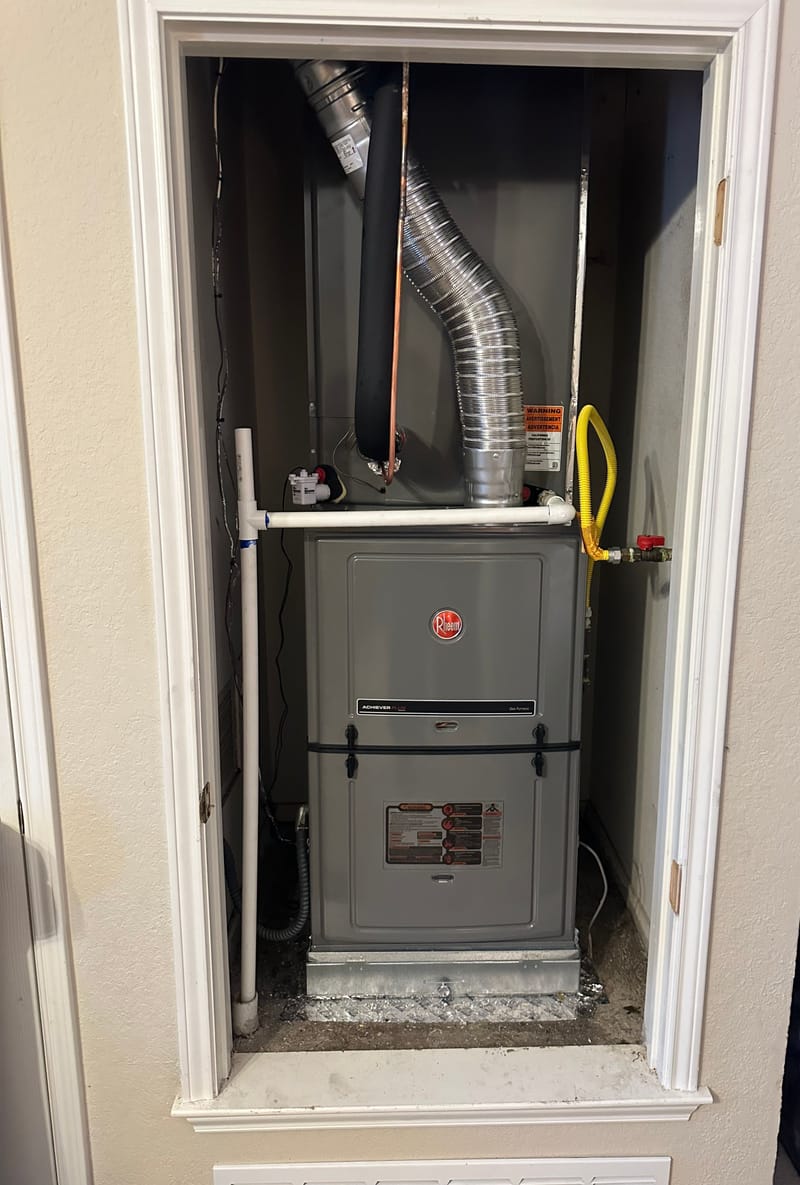
Heating and furnace service
A furnace that won’t heat is usually protecting itself. The safety controls that shut it down point to the cause, as long as someone reads them before resetting them.
Common reasons people call
- No heat, or the blower runs but the air is cool.
- The furnace starts, then shuts off within a few minutes.
- A blinking status light on the control board.
- Unusual noises at startup: booming, squealing, or rattling.
- Some rooms stay cold while others are comfortable.
- Water around a high-efficiency furnace.
What’s usually behind it
Ignition and flame sensing. Modern furnaces use hot-surface or spark igniters and a flame sensor that confirms the burners lit. A dirty sensor or a worn igniter is one of the most common causes of a furnace that starts and then quits.
Airflow and overheating. A clogged filter or closed returns can make the heat exchanger overheat. The high-limit switch then shuts the burners off to protect it.
Venting and drainage. High-efficiency furnaces produce condensate and vent through plastic pipe. A blocked vent or a clogged condensate trap trips the pressure switch and stops the furnace.
Controls. Thermostat wiring, door safety switches, and control boards can fail too, though less often than the parts above.
If you smell gas
Leave the house first. Don’t operate switches or the thermostat on the way out. Call your gas utility or 911 from outside, and don’t go back in until it has been checked.
What to expect
What a heating visit involves
Combustion appliances get a safety-first approach: we check that the system is safe to run before we work on making it run.
-
Read the fault
Status-light codes, the sequence of operation, and where it stops. Each safety switch tells part of the story.
-
Check combustion safety
Venting, gas pressure, flame sensing, and the heat exchanger area, along with carbon monoxide testing where appropriate.
-
Explain the cause
What tripped, why it tripped, and what fixing it involves, before work begins.
-
Repair and run a full cycle
Make the repair, then watch the furnace through complete heating cycles to confirm it starts, runs, and shuts down correctly.
Services
Other services
-
AC Repair
Warm air from the vents, short cycling, ice on the lines, or an outdoor unit that won’t start. We test the electrical and refrigerant sides before recommending a repair.
-
HVAC Installation
When repair no longer makes sense, we walk through the options and install new equipment properly: lines evacuated, connections tested, startup checked.
-
HVAC Maintenance
Seasonal cleaning and inspection of coils, drains, electrical connections, and refrigerant performance, so small issues get caught early.
-
Second Opinions
Been told you need a new system? We’ll take an independent look and tell you what we see, including when a repair is the better choice.
When it stops working, call.
Tell us what the system is doing. We’ll tell you what we think is happening and what a visit involves.
- Service area
- Irving, Las Colinas, Coppell, Farmers Branch, Grand Prairie, Euless, Bedford, Grapevine