
Services
Air conditioning repair
Most cooling failures come down to a handful of causes: electrical, airflow, refrigerant, or controls. The work is finding which one, and proving it before anything gets replaced.
Common reasons people call
- The system runs, but the air from the vents isn’t cold.
- The outdoor unit hums or clicks but the fan doesn’t spin.
- Ice on the copper lines or the indoor coil.
- The system turns on and off every few minutes.
- Water around the indoor unit or a full drain pan.
- A breaker that keeps tripping when cooling starts.
What’s usually behind it
Electrical components. Capacitors and contactors are the most common failures on outdoor units. They wear out with heat and age, and a failing capacitor can keep a compressor or fan motor from starting while the rest of the system appears to run.
Airflow. A clogged filter, a weak blower, or a dirty indoor coil reduces the air moving across the coil. Cooling drops, and in some cases the coil freezes.
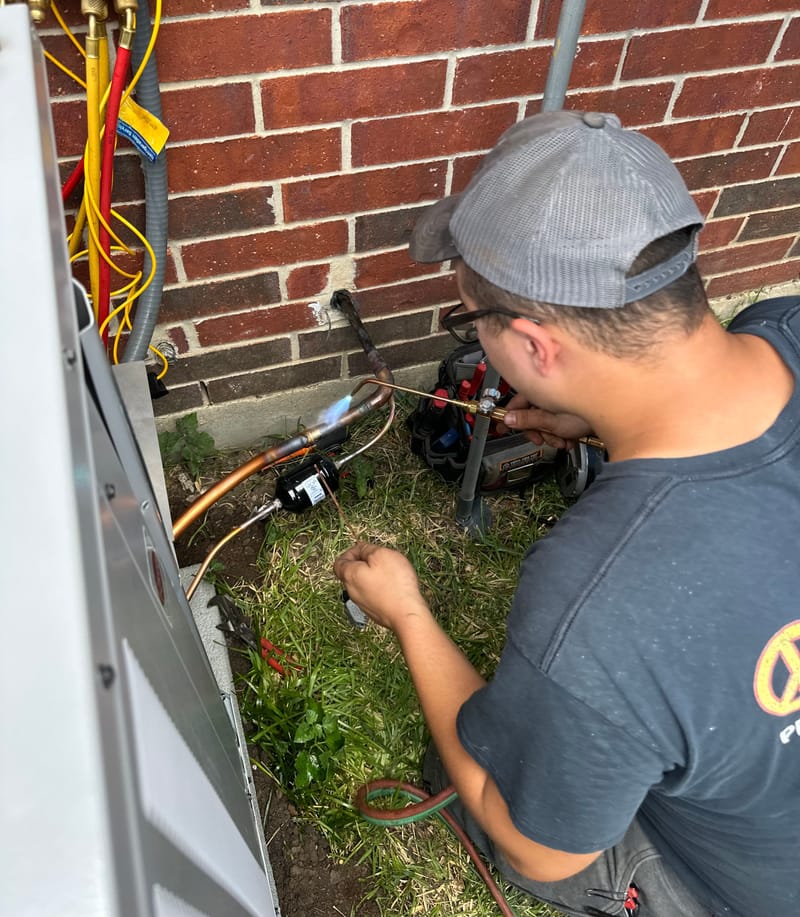
Refrigerant. Air conditioners don’t use up refrigerant. If the charge is low, there is a leak, and adding refrigerant without finding it only postpones the problem. Refrigerant work requires EPA Section 608 certification.
Controls and drains. Thermostat wiring, safety switches, and a clogged condensate line can each shut a system down while making it look like a bigger failure.
Repair or replace?
Most problems are repairable. Replacement becomes worth discussing when a major component such as the compressor or coil has failed on an older system, or when repairs are recurring. When that’s the case, we lay out both paths and the reasoning, and the decision stays with you. If you’ve already been told you need a new system, see second opinions.
What to expect
What a repair visit involves
The order changes with the symptom, but every visit follows the same idea: measure, explain, then repair.
-
Listen first
What the system is doing, when it started, and anything that changed recently. Your description often narrows the problem quickly.
-
Test, don’t guess
Electrical readings on the capacitor, contactor, and motors; refrigerant pressures and temperatures; airflow across the indoor coil.
-
Show what we found
The failed part or the readings that point to it, with options and what each one involves, before work starts.
-
Repair and verify
Make the repair, then run the system and recheck the readings to confirm it is cooling as it should.
Services
Other services
-
Heating & Furnace Service
Furnaces that won’t light, won’t stay lit, or can’t keep up on cold mornings, with gas, venting, and safety controls checked as part of the visit.
-
HVAC Installation
When repair no longer makes sense, we walk through the options and install new equipment properly: lines evacuated, connections tested, startup checked.
-
HVAC Maintenance
Seasonal cleaning and inspection of coils, drains, electrical connections, and refrigerant performance, so small issues get caught early.
-
Second Opinions
Been told you need a new system? We’ll take an independent look and tell you what we see, including when a repair is the better choice.
When it stops working, call.
Tell us what the system is doing. We’ll tell you what we think is happening and what a visit involves.
- Service area
- Irving, Las Colinas, Coppell, Farmers Branch, Grand Prairie, Euless, Bedford, Grapevine